Thursday, 11 November 2010
Judge not, that ye be judged....
I share this link in support of all those who are in favour of judicial accountability. This gains more importance as Justice B. Sudershan Reddy committee has submitted it's report to the Chairman. Rajyasabha, in the removal proceedings ordered by the Parliament against Justice Saumitra Sen. Compare the fact that this proceeding is only the second of it's kind in independent India with that of the instances quoted in the affidavit filed by Shri.Prashant Bhushan. The reality is widely open for every one to understand.........

Monday, 18 October 2010
Unplanned Unwinding

The preparation of next day’s marriage was in full swing. For the groom and male relatives there, the ‘spirit’ was already in the rising. It was 21.30, and time for us to leave. We had to catch a train at Nileshwar to Calicut at 23.00.
As the train reached Calicut station, our driver for the next three days, called us to inform about the waiting vehicle. It was 03.00, when we reached Nilambur. As we entered the hotel, what invited the instant attention, were the Kerala mural paintings on canvass. We got ready for the day after a short four hour rest. We had a fluid plan. We were still deciding whether to explore wayanad district or to travel to Ooty via Bandipur. Our first visit was to the oldest man made teak plantation on earth the Conolly’s plot.

The hanging bridge across river ‘Chaliar’ offers panoramic view of the chaliar and the surrounding mountains. Other side of the bridge is the world’s oldest teak tree standing amidst thick cover of trees. The place is rife with butterflies of all hues and sizes. The plantation is well maintained by the forest department and the annual auction of teak logs conducted by the forest department attracts bidders from all over the country. Nilambur teak is known for its quality.
Emphasizing this is another edifice, standing at this very place, though not living. It’s the teak museum of Nilambur. The saw dust statue of nature and various kinds of bamboo plants that adore entrance road to the museum and the inverted root system of a 55 year old tree that is placed at the portico of the museum elevate this place to a surreal stature.

All these bamboos have name plates to help novices like me. Placing the plant name near the plant is one thoughtful act of forest department that we notice in all important places of Nilambur.


There are specimens of butterflies, moths and insects whose life cycle involves teak trees. Sadly ,1/3rd of the specimens are missing. Adjoining the museum is the botanical garden which houses various species of water plants, orchids, and medicinal plants rare and near extinct trees. This is a well maintained garden and one can easily spend a day here. Here we came across a plant that attracts hundreds of butterflies.


Maintenance of guest houses by forest department is good. With all basic facilities, one can’t ask for more in a place like this .It would be a stay on the lap of nature.


Morning dawns, slowly dragging away the dark blanket and giving back the identity. Everything is back to its self and burst of activity catches us also. Around 06.30. am, we set out into the forest. The previous day’s rain had made everything brand new. From the straws of grass to chirping birds, everything is new and fresh. We saw a family of Indian gaur. A herd of elephants with a cute calf was an unforgettable sight. The grownups were pampering the small one so much that it looked like a fantastic family drama.

The Indian gaur family

As the rain has played havoc with the interior routes, we cut short our ride and stopped by a watering hole.

The silence of the place was ruptured only by the occasional fluttering of winged residents. Sitting there speechless, is a blessing in life.
Once out of the forest we decided to push off to Ooty as early as possible as we had to reach Coimbatore the same evening. This time we took the route of Bandipur –Masinagudi-Ooty. The road gets narrower once we start climbing up. The climb was steep and there were more than 30 hair-pin bends. We got luckier as we spotted a Malabar giant-squirrel, lazing out its mid day. The photo doesn’t show the entire length of its tail. We didn’t wasn’t to disturb it either. So, felt happy with whatever we could click and left the place quickly.

Once in Ooty we headed straight to Avalanche as we didn’t want be in the crowd. Avalanche boasts of having the Trout breeding facility which had its origins in the 19th century. The fisheries department official explained us the entire process and it only kindled our interest further. Watching them holding against the current of water from the upstream was wonderful. The temperature near this shed in the trout farm was freezing and the air was cold and heavy. However the swimming beauties in the nearby tank were all that mattered.

We went further to the Avalanche power station, and a chat with the guards there was very informative. One of the guards said “the English didn’t waste a drop of water. Everything is converted into power “. Here, in and around Ooty alone, there are more than a dozen power stations.
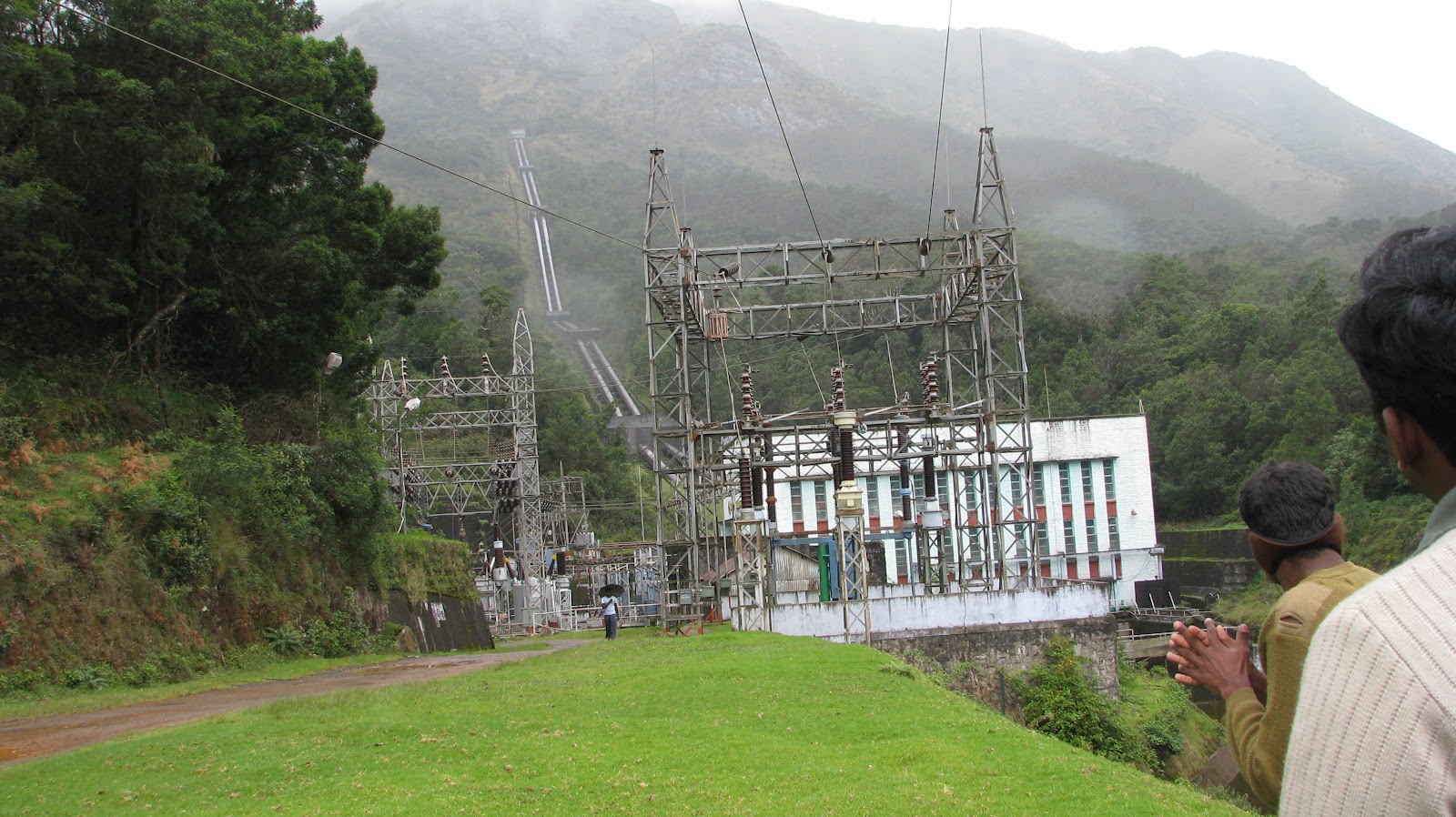
The water released from here goes to the Avalanche dam.
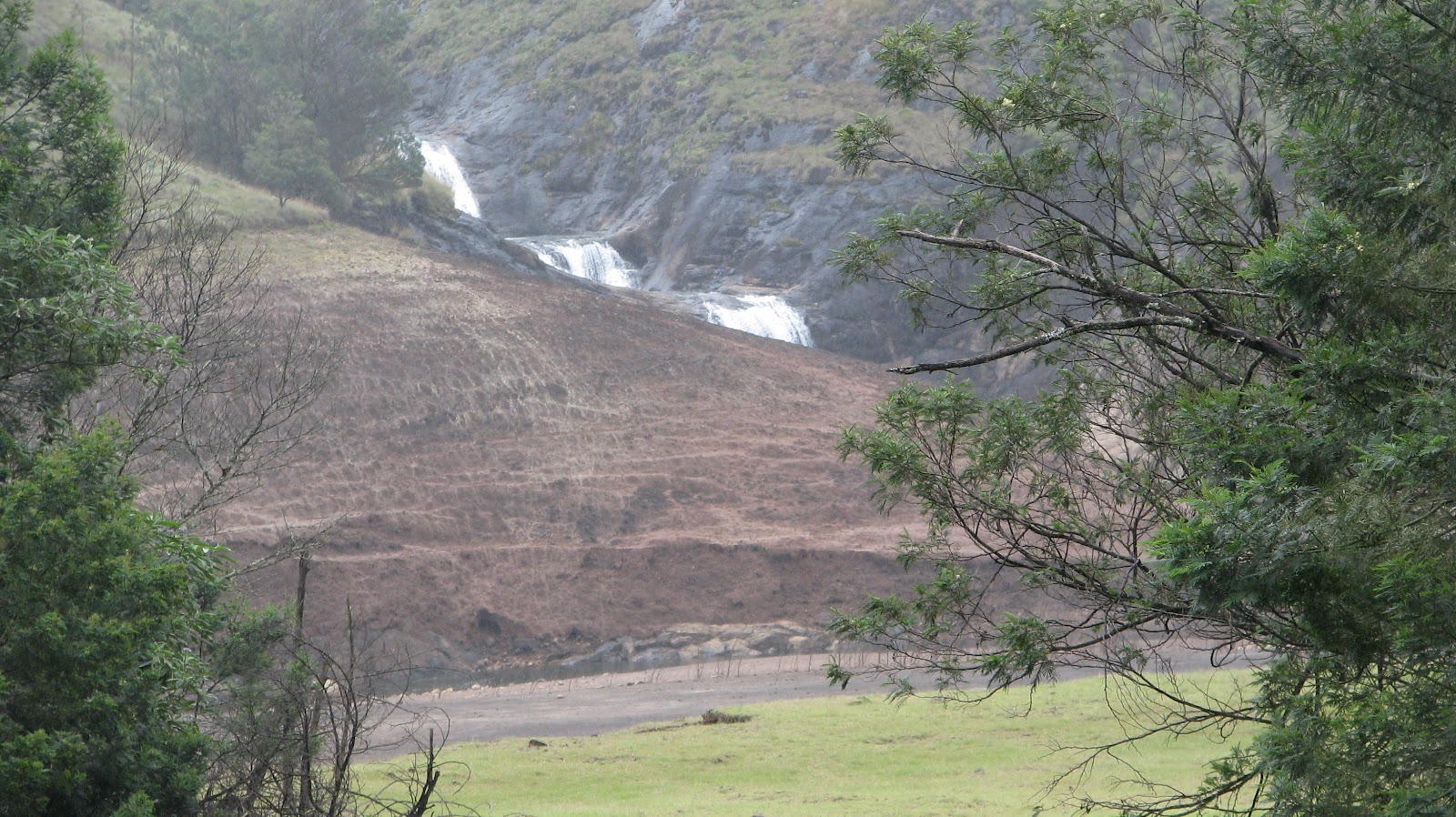
The guards insisted that we walk up to nearby waterfalls. On any other occasion we would have instantly accepted. But this time our preoccupation at Coimbatore kept us pulling. While coming back, we spotted the lion tailed –macaque with her off-spring, at the very same place where we saw her while going to Avalanche. As her attention was on us, we didn’t try to click ay pictures. By the way, what is the necessity of a photo, when the warm hug of the primate is so vividly etched in the memory?
You may wonder why this journey in a hurry? This is only a trailer for an elaborate visit. …So wait for the main picture to release.
Tuesday, 6 July 2010
My grand day
When man started wandering, he took his first step towards civilisation. Changing landscapes, climatic condition ,food habits etc.. bring in him adaptability. Not a single historical event is unaccompanied by travel. People who made history have been great travellers too. Nevertheless, travel bug bites common man too and the latest victim were myself and my sweet heart.

Rampachodavaram in monsoon is a green paradise. It takes a lot of effort to contain ones wanderlust and be at home on a holiday. The weak mortals ,that we are, I, myself and my husband started at 1045 hrs. The mildly cold weather and equally cold breeze were very energizing. As we set off, the panoramic eastern ghats started unfolding itself to us. The mountain peaks were trying to peep out through the cloud veil, but in vain. I could see the sea of change in the colour in the surrounding in a matter of few weeks. From a barren brownish shade the whole place has been painted green thanks to the monsoons. All this green was waiting patiently for a pat from the rain gods.A single stroke of rain woke them up and pasted them all over. The rivers, trees , creepers,birds , animals, insects....rain has brought them an assurance for life for another year. Joy of life is all over the place, gushing with energy.

First we crossed the weekly market of Rampachodavaram. The market was weak as the previous day's rain could have affected the mobility of tribals who come from far off places on foot or by shared auto-rikshaws. The dull market place was melancholic, soon to be replaced by the winding roads of the eastern ghats.The hazy mountain peaks accompanied us till Maredumilli, from where we took the left diversion on the highways.

We also bought some bamboo chicken from Maredumilli for which the place is well known. From here the scene changes. One slowly falls into the binding embrace of mother nature. The engulfing forest leaves no option but to silently fall in love with it. The tall trees are now covered by cllimbers and the spaces between trees are covered by vegetation of all kinds. There is little space that is left untouched by green. Just after maredumilli, within 10kms, one comes across various places of tourist interest like Jalatharangini,Brindavan, madankunj and a camping site on the banks of Pamuleru river etc.. all developed by forest department. The camping site is less known to the tourist crowd. So to that extent pure and placid.

Our next agenda is to stay there. As for the day we had a goal post still 65 kms away, we started again from the bridge on Pamuleru after a short halt. My husband being the democratic and administrative Sheh-in-shah of the place listend to his subjects before we started. The people here live for the day and that has not caused them any harm. In fact this attitude has preserved nature here. Civilisation has stopped its onward journey with them for the betterment of nature. It advanced with us only to see a decaying earth. So I would say, civilisation is at its best with them in the form of a life, which is in tune with nature.

We also bought some bamboo chicken from Maredumilli for which the place is well known. From here the scene changes. One slowly falls into the binding embrace of mother nature. The engulfing forest leaves no option but to silently fall in love with it. The tall trees are now covered by cllimbers and the spaces between trees are covered by vegetation of all kinds. There is little space that is left untouched by green. Just after maredumilli, within 10kms, one comes across various places of tourist interest like Jalatharangini,Brindavan, madankunj and a camping site on the banks of Pamuleru river etc.. all developed by forest department. The camping site is less known to the tourist crowd. So to that extent pure and placid.

Our next agenda is to stay there. As for the day we had a goal post still 65 kms away, we started again from the bridge on Pamuleru after a short halt. My husband being the democratic and administrative Sheh-in-shah of the place listend to his subjects before we started. The people here live for the day and that has not caused them any harm. In fact this attitude has preserved nature here. Civilisation has stopped its onward journey with them for the betterment of nature. It advanced with us only to see a decaying earth. So I would say, civilisation is at its best with them in the form of a life, which is in tune with nature.
Back on road, we started climbing up on a road with many hair-pin bends. The average altitude was 650m. Just out of curiosity, we stopped by a rusting name board of the twin water falls of Amrudhadara and swarnadhara. The primates in us prompted us to go and have a look at the falls. A few yards off the road, we were in thick forest. As it had rained the previous day, having control over our feet was very challenging. The earth cut steps were steep and treacherous.At the end of a knee straining trek of a kilometre (approx)we found the silent and elegant falls. One is tall and handsome and the other is broad and beautiful. The place is sworming with mosquitoes. Though we evolved from the same place, going back in evolution and living with our erstwhile neighbours in the forest seems to be difficult even for a short while. The fruit has fallen far away from the tree. The return trek was 'breath taking', literally..

With so much energy spent in the short trek, we were more than ready for the lunch when we started from the twin waterfalls. The very sight of a quite river and it's clean ,vast and pebbly bank was very welcoming. Having lunch there was a fulfilling experience.As monsoon has just set in, the rivers here have not gained mass and momentum yet.The lean flow is just few ruffles and mostly placid.

Humans leave their dirty foot prints wherever they go. The broken beer boottles tell multitude about a cranky bent of human brain that during the course of evolution, took him away from all other species.One can expect to capture a camera full of butterflies of all hue and colour.

Humans leave their dirty foot prints wherever they go. The broken beer boottles tell multitude about a cranky bent of human brain that during the course of evolution, took him away from all other species.One can expect to capture a camera full of butterflies of all hue and colour.

Now, post- lunch , we realised that we were still not half way through to our destination. We had taken too long (5hrs) to travel a 40 km stretch. A non-stop ride was inevitable as we had to return before dark. So we next stopped only at Mothagudem falls.

After a refreshing bath our return journey started. In forest darkness descends like the way ink spreads in water. Before one could realise the whole place is dark. In the night forest has only sounds for its company. We were the lonely travellers in the darkness. We were, except for the light from the head light ,travelling from darkness to darkness. On the entire 90 km stretch, only two buses crossed us from opposite direction. So one could imagine how dead lonely the place was. Our return journey was the most exciting experience of the day.

After a refreshing bath our return journey started. In forest darkness descends like the way ink spreads in water. Before one could realise the whole place is dark. In the night forest has only sounds for its company. We were the lonely travellers in the darkness. We were, except for the light from the head light ,travelling from darkness to darkness. On the entire 90 km stretch, only two buses crossed us from opposite direction. So one could imagine how dead lonely the place was. Our return journey was the most exciting experience of the day.
Monday, 28 June 2010
அண்டை வீட்டார்
நண்பரின் தயவில் அறுபதுகளில் அச்சிடப்பட்ட அண்டைவீட்டார் புதினத்தின் நகல் கிடைத்தது. இத்தகைய புத்தகங்களை தேடிப்படிக்கும் நிலையில் நான் இல்லை. எனவே வாசல் தேடி வந்த புத்தகம் வீடு தேடி வந்த விருந்து.
புத்தகத்தைப்பற்றி சொல்லும் முன் ஒன்றைச் சொல்ல வேண்டும். கதையின் மூலமொழியும் மொழிபெயர்ப்பு நடையும் எத்தனை பொருந்தியவை என்பது தெரியவில்லை. ஆனால் வாசகனுக்கு ஒரு நாயர் தரவாட்டில் நுழைவதில் எந்த சிக்கலும் இல்லை.அவ்விதத்தில் நல்ல மொழிபெயர்ப்பு என்றே நினைக்கிறேன்.
இரண்டு கிழவர்கள் திண்ணை மீது அமர்ந்து கொண்டு நாட்டு நடப்புகளை பேசிக்கொள்வதும் ஊர் புரணி பேசுவதும் போன்ற மொழிநடை இந்த கதைக்கு வாய்த்திருப்பது கதையை நமக்கு அன்யோன்யப்படுத்துகிறது. எந்த கதையும் காலத்தின் முன்னகர்வை தவிர்த்து வரமுடியாது. ஆனாலும் சில கதைகள் காலனகர்வை அடிப்படை ஆக கொள்கின்றன. மங்கலசேரி தரவாட்டு காரணவர்கள் ,காரணவத்திகள் வழியாக காலம் நகர்கையில் முக்கோணக்கரையும் தன் பங்குக்கு மாறுகிறது .வெள்ளப்பெருக்கை காண பத்மநாப பிள்ளை வெளியேறுகையில் குஞ்சுவரீது தரவாட்டுக்குள் தயை வேண்டி ஏறி வர எத்தனிப்பது வெறும் நிமித்தம் மட்டும் அல்ல. கதையின் சாரமும் அதுத்தான். கால வெள்ளம் ஓடுகையில் அது தன் காய்களை இடமாற்றிக்கொண்டே இருக்கிறது. ஒரு சமூகம் தன் அடுத்த நிலைக்கு நகர்கையில் அறம் சார்ந்த கலகத்தை ஏற்ப்படுத்தாது விடுவதில்லை. அறம் சார்ந்த கலக்கம் சிந்திக்கும் அனைத்து மனிதனுக்கும் நிகழ்காலத்துடன் இருந்துகொண்டே இருக்கிறது. வாழ்கின்ற காலம் இதற்கு
ஒரு தடை இல்லை. அதைத்தான் புத்தனிலும் , 'காலம் கெட்டு போச்சு' எனும் மூதாட்டியின் அயர்விலும் காண்கிறோம்.
என்றால் இந்த கலக்கம் தொடர்ந்து வருவது. எந்த கோட்பாடும் இதற்கு முற்றுப் புள்ளி வைக்க இயலாது. இந்த இயலாமை இந்நாவலின் மூல ஸ்வரம். தன் வீட்டுக்குள் அடைக்கலம் தரும் அதே பத்மநாப பிள்ளை வயலில் தன்னை கைதாங்க வரும் புலையனை 'சீ ' என்று புறம் தள்ளுகிறார். அவரின் ஜாதி ஒழிப்பு அடைக்கலம் தரும் வரை தான். மாறிவரும் காலம் அவருக்குள் மாற்ற முடிந்தது அவ்வளவே.
ஈழவ, நாயர் சண்டைகளும் அத்தோடு நசியும் ஊரு,ம் இரு தரவாடுகளும் மாறி வரும் காலத்தின் பொது பிம்பங்கள். இந்த பொது பிம்பங்களுக்குப் பின் தான் எத்தனை மனித மனங்கள். மானம் பெரிதென்று திரும்பிப்பார்க்காமல் இறங்கிப்போகிறான் குஞ்சன். 'அவருக்கு மூன்று பெற்றேனே, என்னிடம் கூட சொல்லவில்லையே' என்று கல்யாணி கலங்கும் போது விதி பாரபட்சமில்லாததாகிறது. மங்கலசேரி தரவாட்டில் வாழ்வு முடிவுக்கு வருகையில் அது தரவாட்டின் வாரிசுகளை அள்ளிக் கொண்டு போகிறது. அதில் தப்பிப் பிழைக்க ஒரே வழி விலகிச் செல்லுதல் தான். பத்மநாப பிள்ளையின் அடுத்த தலைமுறைக்கு தரவாட்டு பாரம்பரியம் ஒரு பொருட்டல்ல என்றாகிறது. இந்தக் கருத்து மாற்றம் ஒரு தலைமுறையை நிர்மூலமாக்கி பின் வருகிறது. ஒரு தலைமுறையின் வதைகளை , துன்பங்களை , சுய அர்ப்பணிப்பை காலால் இடறி விட்டு வாழ்வின் சாத்தியங்களை நோக்கி எவ்வித குற்ற உணர்ச்சியுமின்றி முன்னேரிச்செல்கிறது வாழ்ந்திருப்பதர்க்கான பேராவல். சரோஜினி பித்து பிடித்து சாவை நோக்கி செல்கையிலும் அவள் சாவிலும் பெரிதாக அலட்டிக் கொள்ளாமல் தன் வியாபாரத்தை கவனிக்க அவளை வீட்டில் பூட்டிச் செல்லும் ராஜசேகரனின் தலைமுறை மங்கலசேரி வீட்டில் வாழ்வின் களியாட்டத்தை மீட்டெடுக்கிறது. வாழ்ந்திருப்பதே வாழ்வின் மிகப்பெரும் அறமா? தனி மனிதன் தன் சுயதேடலில் கண்டெடுக்கக வேண்டிய அப்பெரும் பொருளை முன்வைக்கும் கேள்வியே இப்புதினம்.
Saturday, 29 May 2010
Kaaval kottam
மதுரையின் மனிதர்களின் கதை
மனிதன் தன் கடந்த காலத்தின் தொகை. அவனின் அறியா கடந்த காலம் வாழ்வின் ஒவ்வவொரு கணத்திலும் வந்து போகிறது. இறந்த காலத்தை முழுவதுமாய் அறுத்துவிட்ட மனிதன் பைத்தியமாகிறான். அதனால் தான் வரலாறு அவனுக்கு இன்றியமையாதது என்றாகிறது. வரலாற்றை அதிகம் பொருட்படுத்தாத நம் இனத்துக்கும் தலைமுறைக்கும் அதனுள்ளிருந்து வெளியெடுக்க சுவாரசியமாய் ஏதுமில்லை. காலையில் உண்ணும் இட்லிக்கும் சட்டை பொத்தானுக்கும் வரலாறு இருந்தாலும் பெரிதாய் என்ன போய்விட்டது?
இப்படி ஒரு சூழலில் ஒருவர் பொறுமையாய் ஒரு ஆயிரம் ௦௦௦ பக்க புதினம் படைப்பது மனவலியை சோதிக்கும் முயற்சிதான். அதனாலேயே காவல் கோட்டம் முக்கியத்துவம் பெறுகிறது.இந்நாவல் குறித்த சர்ச்சைகளுக்குள் நான் போகவில்லை. நாவலை படித்த பின் வாசகன் எடுப்பதும், விடுவதும், 'நியாயமான' வாதங்களை முன் வைப்பதும் அவனவன் உரிமை. விமர்சனம் விதண்டாவாதமாய் இல்லாதவரை இலக்கியத்துக்கு அனுகூலம் தான்.
அறுநூறு ஆண்டு கால வரலாறு ஒரு இனத்தின் வாழ்வுடன் அதன் ஏற்ற இறக்கங்களிநூடே பிணைந்து செல்லும் புனைவுதான் காவல் கோட்டம். இன்றைய தமிழகத்தின் பண்டைய தலை நகரங்களில் காஞ்சிக்கும் தஞ்சைக்கும் ஜனரஞ்சக வரலாற்று புதினங்கள் உள்ள நிலையில் மதுரைக்கு ஒரு பெருங்கதை சொல்லப்படவில்லை. இப்புனைவு ஜனரஞ்சகம் எனும் நிலை தாண்டியது. இது வரலாற்றை மன்னன் வழி அல்லாமல் அதன் சகடங்களை தாங்கி முன்னகர்த்தும் ஒருவழிப்பாதை பற்றியது. வரலாற்றின் பின் நிற்கும் கோடிக்கணக்கான அறியாமுகங்களின் வழி சொல்லப்பட்ட கதை இது
பிரம்மாண்ட கற்பனையும் பெரும் புனைவு மொழியும் கூடிய படைப்பு என்று நான் கருதவில்லை. ஆனால் கதையின் கருவுக்கு தேவையான படைப்பு மொழி கூடிவந்த படைப்பிது. களவுக்கும் காவலுக்கும் இடையே ஆடிச்சென்ற வாழ்க்கைகளின் சாரத்தை எளிமையாய் சொல்லிச்செல்லும் மொழி. தாதநூர் கள்ளர்கள் பேசிய மொழி.
கதையில் உண்மைக்கு புறம்பான ஏதேனும் உண்டா என நான் தேடவில்லை. இது கதை. என்றாலும் பெருமளவு வரலாற்றுடன் ஒத்திருப்பதாகவே கருதுகிறேன் .
மதுரையின் விதி கைகள் மாறி வந்துகொண்டே இருக்கிறது.இஸ்லாமியர் கையில் செல்லும் மதுரையில் தொடங்கும் கதை ஆங்கிலேயர் கையில் முழுமையாய் அடங்குவது வரை நீள்கிறது. கதைகள் வாழ்வின் அடிப்படை ஆகிவிட்ட ஒரு சமூகத்தின் கதை அதனோடு இணைந்து கொள்கிறது. மதுரை என்பது ஒரு ஊர் அல்ல. அது ஒரு தொல் அடையாளம். காண்பவனின் காட்சிக்கு இணங்க தன்னை தகவமைத்துக் கொள்ளும் அதிசய உயிர் அது. காலங்களின் நீட்சியுடன் மதுரை மாறுகையில் அதன் பகல் மட்டும் மாறவில்லை. கடந்த கால மதுரையின் பாதி அதன் இரவுகள். இந்நாவல் அதன் இருளுக்குள் சூல் கொண்டு பிறந்து வந்த தலை முறைகளின் வாழ்க்கை.அதனால் தான் இருள் குறித்த மொழி அவ்வார்த்தைக்கு முப்பரிணாமம் கொடுத்து உலவ விடுகிறது. இருள் ஒரு கதா பாத்திரமாக வருகையில் அதன் படைப்பில் ஆசிரியனின் உச்ச கட்ட படைப்பு திறன் வெளியாகிறது.
கதையின் பெண் பாத்திரங்கள் கட்டற்றவர்கள். தங்களின் எல்லையை தானே நிர்ணயிக்கும் காட்டாறுகள். சடச்சி எனும் மூதாய் தலைமுறை தோறும் பெண்கள் சொல்லும் கதைகளின் வழி நின்று தன மக்களை காத்து வருகிறாள். அவளுக்குள் இருந்த ஆங்காரம் அவள் வழிப் பிள்ளைகள் அத்தனை பேருக்குள்ளும் உள்ளது. மாறும் காலம் சடச்சியை வெறும் நினைவாக்குகிறது. மூதாயின் வாக்கின் மீது வாழ்பவர்கள் வாழ்க்கையை முன்னெடுக்க கதைகளின்றி போகும் ஒரு பேய்க்காலம் வந்து சேர்க்கிறது. மத மாற்றத்துடன் வேர்களை இழந்த போதகர் டேவிட் சாம்ராஜ் தன் இனத்தோடு மீண்டும் உறவு கொள்கையில் சடச்சியின் பிள்ளைகளில் ஒருவனை உருவியெடுத்து தன் ஆயுதமாக்கி கொள்கிறது ஆங்கில அரசாங்கம். அதிகாரம் தன்னை நிலை நிறுத்த ஆடும் ஆட்டத்தில் உணர்வுகள் பகடைகள் ஆகின்றன. டேவிட் சம்ராஜின் மறைவுக்கு பின் அலறியழும் மேரிக்கு மட்டுமே இவ்வுண்மை தெரிகிறது. காவலை இழந்து களவுக்கும் வழியிழந்த சடச்சி மக்கள் பட்ட சாமிகளுடன் தனித்து விடப்படுகின்றனர். சாதிக்கும் அதிகாரத்துக்கும் தொன்று தொட்டு இம்மண்ணில் இருந்துவரும் உறவுமுறையை எவ்வித பூடகமும் இல்லாமல் முன்வைக்கும் நாவல் அதற்கான காரணத்தை கோடிட்டு செல்கிறது.
மதுரையின் நாட்கள் வழியே வழிந்தோடும் ஆயிரக்கணக்கான வாழ்க்கைகளின் சில துளிகளை வெவ்வேறு காலகட்டங்களில் இருந்து கோர்த்தெடுத்து புனையப்பட்ட கதையிது .ஒரு சில விமர்சங்கள் மூலம் புறந்தள்ள வேண்டிய நாவல் அல்ல காவல் கோட்டம் என்பது என் உறுதியான எண்ணம்.
மனிதன் தன் கடந்த காலத்தின் தொகை. அவனின் அறியா கடந்த காலம் வாழ்வின் ஒவ்வவொரு கணத்திலும் வந்து போகிறது. இறந்த காலத்தை முழுவதுமாய் அறுத்துவிட்ட மனிதன் பைத்தியமாகிறான். அதனால் தான் வரலாறு அவனுக்கு இன்றியமையாதது என்றாகிறது. வரலாற்றை அதிகம் பொருட்படுத்தாத நம் இனத்துக்கும் தலைமுறைக்கும் அதனுள்ளிருந்து வெளியெடுக்க சுவாரசியமாய் ஏதுமில்லை. காலையில் உண்ணும் இட்லிக்கும் சட்டை பொத்தானுக்கும் வரலாறு இருந்தாலும் பெரிதாய் என்ன போய்விட்டது?
இப்படி ஒரு சூழலில் ஒருவர் பொறுமையாய் ஒரு ஆயிரம் ௦௦௦ பக்க புதினம் படைப்பது மனவலியை சோதிக்கும் முயற்சிதான். அதனாலேயே காவல் கோட்டம் முக்கியத்துவம் பெறுகிறது.இந்நாவல் குறித்த சர்ச்சைகளுக்குள் நான் போகவில்லை. நாவலை படித்த பின் வாசகன் எடுப்பதும், விடுவதும், 'நியாயமான' வாதங்களை முன் வைப்பதும் அவனவன் உரிமை. விமர்சனம் விதண்டாவாதமாய் இல்லாதவரை இலக்கியத்துக்கு அனுகூலம் தான்.
அறுநூறு ஆண்டு கால வரலாறு ஒரு இனத்தின் வாழ்வுடன் அதன் ஏற்ற இறக்கங்களிநூடே பிணைந்து செல்லும் புனைவுதான் காவல் கோட்டம். இன்றைய தமிழகத்தின் பண்டைய தலை நகரங்களில் காஞ்சிக்கும் தஞ்சைக்கும் ஜனரஞ்சக வரலாற்று புதினங்கள் உள்ள நிலையில் மதுரைக்கு ஒரு பெருங்கதை சொல்லப்படவில்லை. இப்புனைவு ஜனரஞ்சகம் எனும் நிலை தாண்டியது. இது வரலாற்றை மன்னன் வழி அல்லாமல் அதன் சகடங்களை தாங்கி முன்னகர்த்தும் ஒருவழிப்பாதை பற்றியது. வரலாற்றின் பின் நிற்கும் கோடிக்கணக்கான அறியாமுகங்களின் வழி சொல்லப்பட்ட கதை இது
பிரம்மாண்ட கற்பனையும் பெரும் புனைவு மொழியும் கூடிய படைப்பு என்று நான் கருதவில்லை. ஆனால் கதையின் கருவுக்கு தேவையான படைப்பு மொழி கூடிவந்த படைப்பிது. களவுக்கும் காவலுக்கும் இடையே ஆடிச்சென்ற வாழ்க்கைகளின் சாரத்தை எளிமையாய் சொல்லிச்செல்லும் மொழி. தாதநூர் கள்ளர்கள் பேசிய மொழி.
கதையில் உண்மைக்கு புறம்பான ஏதேனும் உண்டா என நான் தேடவில்லை. இது கதை. என்றாலும் பெருமளவு வரலாற்றுடன் ஒத்திருப்பதாகவே கருதுகிறேன் .
மதுரையின் விதி கைகள் மாறி வந்துகொண்டே இருக்கிறது.இஸ்லாமியர் கையில் செல்லும் மதுரையில் தொடங்கும் கதை ஆங்கிலேயர் கையில் முழுமையாய் அடங்குவது வரை நீள்கிறது. கதைகள் வாழ்வின் அடிப்படை ஆகிவிட்ட ஒரு சமூகத்தின் கதை அதனோடு இணைந்து கொள்கிறது. மதுரை என்பது ஒரு ஊர் அல்ல. அது ஒரு தொல் அடையாளம். காண்பவனின் காட்சிக்கு இணங்க தன்னை தகவமைத்துக் கொள்ளும் அதிசய உயிர் அது. காலங்களின் நீட்சியுடன் மதுரை மாறுகையில் அதன் பகல் மட்டும் மாறவில்லை. கடந்த கால மதுரையின் பாதி அதன் இரவுகள். இந்நாவல் அதன் இருளுக்குள் சூல் கொண்டு பிறந்து வந்த தலை முறைகளின் வாழ்க்கை.அதனால் தான் இருள் குறித்த மொழி அவ்வார்த்தைக்கு முப்பரிணாமம் கொடுத்து உலவ விடுகிறது. இருள் ஒரு கதா பாத்திரமாக வருகையில் அதன் படைப்பில் ஆசிரியனின் உச்ச கட்ட படைப்பு திறன் வெளியாகிறது.
கதையின் பெண் பாத்திரங்கள் கட்டற்றவர்கள். தங்களின் எல்லையை தானே நிர்ணயிக்கும் காட்டாறுகள். சடச்சி எனும் மூதாய் தலைமுறை தோறும் பெண்கள் சொல்லும் கதைகளின் வழி நின்று தன மக்களை காத்து வருகிறாள். அவளுக்குள் இருந்த ஆங்காரம் அவள் வழிப் பிள்ளைகள் அத்தனை பேருக்குள்ளும் உள்ளது. மாறும் காலம் சடச்சியை வெறும் நினைவாக்குகிறது. மூதாயின் வாக்கின் மீது வாழ்பவர்கள் வாழ்க்கையை முன்னெடுக்க கதைகளின்றி போகும் ஒரு பேய்க்காலம் வந்து சேர்க்கிறது. மத மாற்றத்துடன் வேர்களை இழந்த போதகர் டேவிட் சாம்ராஜ் தன் இனத்தோடு மீண்டும் உறவு கொள்கையில் சடச்சியின் பிள்ளைகளில் ஒருவனை உருவியெடுத்து தன் ஆயுதமாக்கி கொள்கிறது ஆங்கில அரசாங்கம். அதிகாரம் தன்னை நிலை நிறுத்த ஆடும் ஆட்டத்தில் உணர்வுகள் பகடைகள் ஆகின்றன. டேவிட் சம்ராஜின் மறைவுக்கு பின் அலறியழும் மேரிக்கு மட்டுமே இவ்வுண்மை தெரிகிறது. காவலை இழந்து களவுக்கும் வழியிழந்த சடச்சி மக்கள் பட்ட சாமிகளுடன் தனித்து விடப்படுகின்றனர். சாதிக்கும் அதிகாரத்துக்கும் தொன்று தொட்டு இம்மண்ணில் இருந்துவரும் உறவுமுறையை எவ்வித பூடகமும் இல்லாமல் முன்வைக்கும் நாவல் அதற்கான காரணத்தை கோடிட்டு செல்கிறது.
மதுரையின் நாட்கள் வழியே வழிந்தோடும் ஆயிரக்கணக்கான வாழ்க்கைகளின் சில துளிகளை வெவ்வேறு காலகட்டங்களில் இருந்து கோர்த்தெடுத்து புனையப்பட்ட கதையிது .ஒரு சில விமர்சங்கள் மூலம் புறந்தள்ள வேண்டிய நாவல் அல்ல காவல் கோட்டம் என்பது என் உறுதியான எண்ணம்.
Saturday, 21 November 2009
The Gospel of Dan Brown
What else can I say about a novel/priestly guide. I mean to say, The Lost Symbol is more of a caticism class and a novel to the least measure.
Dan Brown, while starting this novel, had a likely goal of having a fast moving storyline and had managed it well till halfway when the story telling morphed into preaching. I do not deny any points that Dan Brown has to say on Bible. As it happens to all great teachings, time and canonisation have eaten away the spirit, and the body case is being showcased, dressed in the attire of the day. But........ Mr Brown, dont you think that it would be wise on my part to buy a book on theology rather than your novel had I ever had any intention of going deep into the religion? A bad choice on my part I would say
I 've read Da Vinci Code. Missed Digital Fortress ( Dont regret ,says a friend). Watched Angels and Demons and now The Lost Symbol. As the last two happened in quick succession, I've only one concern. If this story is ever made into a film, the screenplay would require a genius and editing would require twice the same intelligence or the producers had to advice the filmgoers, first to read and then to watch.
One last doubt. This is literally the last of the so many doubts I had while reading the novel. Why is Peter Solomon packing up the day/night of hyperactivity of Tom Hanks errrr.... Professor Robert Langdon with one more adventure which can obviously wait. Was he going to have a cardiac arrest the next day or your publisher asked to CUT SHORT?
A mess up all and fix up all. Good Luck guys who plan to read.
MS: A Life in Music. T J S George
If your initial attraction towards MS was more to do with her lovely charm than with her music, you are in the same league as I am.
Surrounded by old music lovers, who were die-hard old timers, MS's name always used to pop up in my household. As I grew up, I started picking up the gossip threads attached with that Tamil newspaper "Dinamani", which was steadfastly holding on to its old time turf,and which was one of my childhood penchants. It was through Dinamani Kathir, the sunday supplement of Dinamani, that I gained some knowledge about the stalwarts of musical era. During the historic occasion of the 50th anniversary of India's Independence(1997), there were articles on many eminent personalities and Sadasivam was one among them. Incidently he passed away that very same year and incidently there were more stories about him.
The book MS A Life In Music is also about Sadasivam, as much it is about MS. Changing the title as MS A Life in Sadasivam would certainly not be misleading. Fun apart the book is a good effort, probably the best, in encapturing the life of the legend called MS. I would like to share some of my ponderings on MS which had come through this book. Who was MS? A Musician? Probably that is the most known side of MS. But this book gives a picture of a woman who had no more aim in life than getting married and having children.

The ingenious mind that started off from Madurai in search of protection turned out to be one of the best voices of the century and that's history. But while narrating this journey the author takes us to 'Devadasi' Shanmuga vadivu's household in Madurai. The children of the household only had mother to identify and fathers were just approximations.Probably, this could be the reason behind MS's desire to 'settledown' The frailty of the position of Devadasis in a well paved social structure must have been a haunting reality for MS till the time she stayed with her mother. One can understand MS when she decides to leave to Madras against her mother's will, leaving behind her mother and the plump proposal of marrying a big shot.
How would it to feel to leave home and to become homeless , parentless and patronless, all of a sudden? As a woman in her early twenties and living in early twentieth century, the situation was by no means an ordinary one. Her decision to stay with Sadasivam,who was already married and was a father of two, should be viewed in this background. MS at this point is a woman at her best. The feminine psyche that has been longing for security during these millions of years of evolution was at work. It was not an impulsive decision but a decision driven by instinct. We can attach no other tags and the author sees this well. This was the only juncture on her life when MS acted on her own.How ever this development became subject matter of the gossip mill of the times.
In Madras with Sadasivam ,MS ,by then a knownsinger, starts off her career in cinema. After four cinemas of mediocre acting and good singing, Sadasivam puts an end to her acting. With that started a phenomenal career in music, meticulously planned and orchestrated by Sadasivam. Here one thing needs to be mentioned. The author's portrayal of Sadasivam is slightly tilted and he has less kind words for Sadasivam. Albeit he has every reason to give such portrayal.
The book stands out in many aspects. Firstly the lack of record base has every possibility to ruin the continuity and genuineness of the narration. The author has managed this reasonably well with available sources. The book views Carnatic Music becoming a popular culture from sociological point of view and the perspective is precise and crisp. Details on other women from Devadasis tradition like Balasaraswathi is very limited. More detail on these artists would have done well to the sociological angle of the history of classical art that is interwoven all along the book. Sadasivam was a dominating mentor, teacher, organiser, strategist etc. and MS was willingly his submissive counterpart. Repetition of details on Sadasivam's personal traits drags back the smooth flow of narration. The author has chosen to end the book with an appendix, titled, 'from MS with love' . MS is not available for comments on her love letters to GNB which, probably she wrote believing that it would remain confidential for ever.How she would have reacted to the author's choice of publishing it, is a difficult question. However, by choosing to include this, the author has tried only to be truthful to the subject and questioning his intention would be improper.
A good book . MUST READ for MS fans.
Saturday, 24 October 2009
Victorian Age on paper
This is HISTORY. Beware:)))
I went to my husband's office the other day just to see some interiors he's doing. To my surprise he showed a door which looked like a jail and told that he had come to know about it's existence very recently. The age old building is a testimony to British acumen. Hey , this is not worshipping the west. It's just giving the devil it's own share. They deserve it. The record room here has no electricity. Now, think of the fire accidents that start from record rooms due to electrical short circuit. However, referring files during day time wouldn't be a problem as there are wall length windows which allow sufficient light.
Now, let me come to the interesting part of my visit to this record room. As we were passing rack after rack my husband told that there were files which are more than a hundred years old and showed a rack which was marked, '1898'. I pulled a bundle which roughly resembles a A4 size paper folded lengthwise. With an assurance that it will be returned as such , I brought home the bundle and here are some of my curious findings.
1.Revenue stamp paper-obverse

2.Revenue stam paper-reverse

3. Court fee stamp

Sl. no 1 is the revenue stamp paper bearing the profile of Queen Victoria. Compare this with the image of Qn Victoria in Penny Black. The image in the stamp paper is that of a older Queen. As this stamp paper was used towards the end of the Victorian age, the image used is that of a older Queen, I guess. Not visible in this image is the elaborate water mark with a marking 'ONE RUPEE UNDER TEN". The value of one rupee is divided as eight annas each to both the images of the Queen. Only Queen bears the value??!
Sl.no 2: The reverse side bears the stamp of the stamp department , Godavari(District) dated 01 Nov 1898. The entire text is in Telugu. So...any one who knows Telugu can help me out.
Sl no.3 has the image of a 1/2 Re (eight annas )court fee stamp affixed probably on 31.1.1898 and cancelled on 14.2.1898.During my childhood I was always amused by a double shaded colour pencil which my maternal uncle used for his office work that he carried home on week ends. This pencil had blue shade in one half and red on the other. That faded childhood memory struck me again when I saw this cancelled court fee stamp.From small to big, Indian administration less the British contribution , there will be a huge vacuum.
As I keep exploring these files will get back with more interesting findings.
Monday, 3 November 2008
Letters to the unknown - 3
1. Today I read in a leading 'Business ' Newspaper about the growth in bank loan. Guess the amount that was lent during last qtr....Rs.2lakh crore. What was it in the first Qtr? 46,666 crore, if this news paper is to be believed. Bankers have no clue about who maketh these borrowers.Then what all this hype that 'credit crunch' is made into?
2.Just above the above news I found another tiny column in which K.V.Kamath was requesting the Govt. to bail out Mutual funds and NBFCs. Mr.Kamath let us talk it out logically. I 've no mutual fund units in my name. So when you made profit, I had no benefit from it. The majority of Indians belong to my category. I've been paying tax since I was 22. Any bail out plan will be only from this money. This tax money belongs to millions and meant for the welfare of the millions and not for a handful. How many of our farmers benefited from the mad bull run? You were mentioning about saving economy. Is not this economy built on the premature death of an agrarian economy. We killed the agrarian economy, the farmers , our self -sufficient villages, our nature friendly life style, our Eco friendly farm practices and indigenous varieties of seeds for the greed of money. Who benefited the most when the scrips were trading in a highly over valued market? Has the recent real estate boom made housing more affordable to the lower and middle classes? When profits were private why is that a public ode is written on loss. What if this 'service economy' is given a quiet burial as we did to the agrarian economy? Come let's 'till' it out:))
Saturday, 1 November 2008
letters to the unknown-2
Yesterday I read an article by former minister Jagmohan. That was about Sardar Patel. People who know history will also know the role he played in the formation of present day India. Some Muslim leader said some where that Patel was a terrorist. The article was to counter this stand. It deals in detail Patel's contribution to minorities as the Chairman of minorities commission of the constituent assembly etc ..etc..
Explaining and trying to justify things to religious hooligans is unnecessary. Their skewed mind will never accept truth with impartiality. Why should a secular state have different (religious) laws? Especially the ones which suppress its women folk? Though it was proposed by the constituent assembly with a time limit, what is secularism and secularists are doing in this country?
Why is that only in India patriotism is identified with far right? Is it not my right to love my country which has given me every thing? I'm proud that my country is much more democratic than Pakistan, Bangladesh, Afghanistan, Iran, Iraq, Sri Lanka and Gulf nations though, these nations were more or less contemporaries to Indian freedom. The Muslims, especially Muslim women here in India are much safer.
When I think of love for the country and its values , I invariably remember the lady from(?) God's own country. Today I have few questions for Arundhadi Roy. Do you think that you 're a writer? Do you think that you are a good writer? Do you think that you have any moral authority to talk about environmental issues, when there were allegations on you about construction in a reserve forest area? Why is that you only lend your face (at times voice also) in popular issues? for a short duration? and then nothing is heard about you? I know you're very unhappy with this nation. But what will make you happy? Why is that you only point out short comings and never give solutions for the perceived short comings? We didn't hear you much when another women writer, who had taken refuge in this nation was ill-treated in two major cities of India and was sent out in a mid night... Where was the human right activist in you at that time?Do you think that you would be allowed to get away with remarks against the govt. and state in any of your favourite nations( read..China, Afghan etc). Then why is that your common sense fail to understand the freedom that you enjoy here? Though this nation may not be as sacred as the right wing says, it still deserves sacrilege by a better person than you.. Don't you think so? This last one is out of curiosity... What would you write if you lived in Afghanistan:)?
To the Muslim leader who was talking about Patel, if all who used force are terrorists then who will be left to be worshiped?
Anybody having affiliations with religious and secular hooligans would have already been hurt by this letter. Still, I wanted to tell," keep your religious fanaticism and pseudo secularism off because the people of this nation have been livinig peacefully with various religions and cultures for more than two thousand years now"
Saturday, 11 October 2008
Letters to the unknown: 1
To
The unknown,
Any where in the world.
Sub:- Bringing to your kind notice - anything that shakes the conscience of a civilised human-reg:
Dear dweller on earth,
Recently I read an interview with the author of the book, 'High Crimes', Mr.Michael Kodas. This book is about the crimes against humanity, committed during Himalayan expeditions.I've not read the book. However , from the interview I could make out that the book deals with the way in which, the most venerated Everest and other Himalayan expeditions have been made into deadly traps by selfish individuals and crooked governments. The author has done a lot of field work and research on the subject. It may make a' must read' for the people who plan to go on mountaineering expeditions in the Himalayas.
With best wishes
Dweller of the same home.
11/10/08
Monday, 6 October 2008
Beyond tree line, there is heaven.
Guys , this may be really boring , especially if you had read the July edition of 'Outlook Traveller'. Still, I dare to narrate my own date with The Mighty Himalayas.
Hold on! This is not a glossy paper edition of 'what I did this summer?'. At the most, this would be ranting of an incurable nature lover who cannot hold back from telling the world the details of a just finished DATE.
This may come handy if you seek the same pleasure.
Day 1: 14.08.08
We started from Panchkula at 15.00 with plans to travel all night and reach Manali late in the night as it is 310 kms away. However we couldn't even reach Bilaspur due to landslide beyond Swarghat. So we stayed at the Forest Rest House in Swarghat. The FRH is beautifully located in a scenic place.
Day 2: 15.08.08
Morning opened to the chirping of birds . I sighted Oriental white eyes and Great tits, both in pairs as this is nesting season all over India. Some of us went to Naina Devi to seek the blessings of the Goddess for all the adventures to come. As all the information that was flowing in confirmed a days delay by the straight route, we decided to take the longer route to Manali via Naina Devi, Bangana, Una and Mandi ,a 120 kms extra. The road up to NainaDevi was very narrow and was eroded by rain at many places. At many places we could see live landslides happening. Our only concern was to pass this stretch before another land slide blocked our way. The labourers involved in the work discouraged us from going further. But we took a chance and kept moving. The visibility was very less. The very danger it posed made travel in this stretch thrilling.
Finally when we were done with this stretch, at one turn on the road , the vast, glittering blue surface of the "Bhakra' Dam, caught us by surprise. This is the first place our photo sessions started. Just after the reservoir, there is a short cut to Una saving 15 kms. Due to the condition of the road we couldn't take this road.
By the time we reached in Manali it was well past mid-night. We stayed at the guest house ofHimalayan Adventure Sports Academy ,a very well maintained one.


Day 3:16.08.08
Rotang Pass is 55kms from Manali. So we guessed that it wouldn't be more than two and a half hours before we crossed the pass. As we had already lost a day we wanted to reach 'Sarchu' -kind of mid- point between Leh and Manali -by night. We started around 10.30. By the time we crossed Rotang, it was 17.30. Obviously, we couldn't make it to 'Sarchu that day. We reduced our target to 'Jispa' almost 70 km less of the original target. When we reached 'Koksar'25km away from Rotang we realised that the other two vehicles that were following were not to be seen. So we waited at the PWD guest house at Koksar for 45 mts until the other two vehicles reached. This guest house is also well maintained.By the time we left Koksar it was 19.45.The reason for the delay was flat tire in one of the vehicles. I should mention here that the road leading to and just after Rotang is bad to say the least. They are laying the road (Project 'Deepak'). Hope it'll be ready for next season. Never ever cross this pass on week ends as the tourist population is high and causes traffic jams. This is exactly why we took seven hours to cross the pass. Back to the story..When we started from 'Koksar' with a target of 96km to Jispa we were really not hopeful. We were by now conditioned to giving up. I saw the PWD GH at 'Sisu' while passing through that place. Seemed to be a well maintained one. . After Sisu, we came across two foreign bikers. One was probably on a Royal Enfield. The other one was a brave heart on a Bajaj Boxer kind of bike. I say 'brave heart' because there was no road at all up to Keylong. By now we had lost all our sensitivity to the jerks and volleys. Now the concern was more about survival than about lowly worldly comforts. The cause of concern was the deep gorge along the road and the speedy river flowing in that. So , finally when we reached the GH in......... I remembered the Kural which says, 'it's sweeter to hold the sphere that was aimed at an elephant and missed the target than to hold the arrow that hit the hare correctly'. No other way to console about the days low performance.

Day 4:17.08.08
As we had learnt the lesson from our indiscipline, on day four all were present at the start line with 'defense' discipline. We had one aim....'Leh -Today'. It looked very much achievable as the regular trip guides on the net state that from Sarchu it's a day time's journey. We had provided for the distance between Keylong to Sarchu by starting early, So, we thought that we should be reaching Leh by late in the night. We had break fast at Jispa. Jispa to Sarchu the route is beautiful. One crosses the beautiful Deepak Tal and Suraj Tal . The colour of the water of Suraj Tal can compete with any rare gem of the world. At Deepak Tal we sighted a pair of Black winged Stilt. This is only a passage visitor to this part. Barlacha La, the first pass on our way, was cold and windy. We managed to reach Sarchu for lunch. One could see a lot of Mountain Pigeons and Yellow -billed Chough feeding on the garbage thrown around the Tibetan dhaba here. A truck driver that we met there told that Leh is just five hours away. Probably he didn't provide for contingencies. His advice was to cross 'Tangang La ' during day light. On our way to the next place, 'Pang' , we were stopped by the road laying team of BRO. As we were waiting, we saw a team of foreigners, well past their fifties, crossing us in the opposite direction. All in their brand new Royal Enfields, wore a sense of achievement on their face. They certainly knew how to travel. Just before 'Pang', one comes across beautiful geographical structures formed by wind and snow erosion. The surrounding is a treat to your eyes. When we reached 'Pang' , we realised once again that the day's target is unachievable as we could not cross Tangang La in day light. So we had an unscheduled stay in the tents maintained by Tibetans. They provide clean sleeping space which is compact, comfortable and cost effective. They provide food as well. These kinds of tents are available all along the way from Manali to Leh. But one itch is that there is nothing called ‘toilet’. Be prepared for that.
I was shivering all night as I had no conditioning to the winter climate. My last winter was two years back. My co-passengers, who were from Mussorie had no problem adjusting to the altitude , though it was much higher than that of Leh. A dose of avomin did the trick and I had a great sleep that night.


Day:5 8.08.08
We started early in the morning . Immediately after crossing Pang , the Moreh Plain unfolds itself. Spread over miles , this plain land is surrounded by mountains on all side. From here one has to take diversion to Tso-Kar and Tso Moriri , the wild life havens . Crossing this plains was a great experience. The various shades of mountains, the grazing herds on very unlikely cliffs, the gorges carved out of thousands of years of river activity and its strange resemblance to many of the enthralling landscapes of Colarado and Mexico take you away to another world. The dust trail that a distant vehicle spews into the space makes you feel that you are into some kind of cross country race. Except for the distant snow covered peaks, nature is naked here. Neither cloud nor canopying trees try to cover up nature. The gigantic and barren nature drops panoramic canvass all around you where the scene keeps changing with heavy and serene silence. Your heart drops to the level of nature's silence leaving behind the vociferous mind. You take a heart full.
Some members of the team who took another route to cross the plains sighted a group of Himalayan Griffon and a Lammergeier.Both the species are residents of the Himalayas. We sighted a Lammergeier just before it flew off. Our driver , from Gharwal Himalayas was explaining its habit of throwing bones from a height to break open the bone to feed on bone marrow. On verification this was found to be correct. Around eleven o'clock we reached Tangang La, the second highest motorable road in the world. Half the group performed trek to a nearby snow covered peak. The weather was chill and was dangerously windy.Some developed headache and some others breathing trouble. Our driver was down with chills. One of the team members robed himself in as driver. After entering Indus valley river Indus accompanies us in our travel to Leh.Finally we managed to reach Leh.
Day.6 19.08.08
The day was spent in sight seeing. We visited Thiksey and Hemis monastries and Shey Palace. We sighted group of Chukar, near the fields on our way to Hemis. This bird is a resident of western Himalayas.
Day.7 20.08.08.
We strated from Leh to Diskit. On this road,50 km ahead comes Kardung La, the highest motorable road in the world. This is a steep climb as we climb nearly 7000ft in two hours. This may cause problem to some. We stopped for a while at South Pullu before proceeding to Kardungla. At kardung La, there is a board kept by the army instructing not to stay too long there. However the group trekked to the near-by peak and at half way I could see a father coming down from the peak with his (approx )four year old son guiding his way down. 'You won't fall down son. Papa is there. Common, you can do it'... Now, that's the spirit.
After South Pullu, the road slowly vanishes and at Kardungla and up to North Pullu ,it is only pot holes for you to navigate. The toilets here are made of sand pits. I could see a lot of sparrows nesting in the staked straw roofs of the houses here. The carry on their business like a busy house maker in human homes. When we reached the GH in Diskit, we came to know that there is restriction on electricity supply here. It goes off at 2300hrs. Evening we visited the sand dunes in Hunder. The Double Humped Bactrian Camel is the star attraction. However the sand dunes are beauty in heaps. The touch of the breeze plays magic on the body of the dunes and evokes various emotions at one time. The sense of falling apart and morphing entangle the onlooker. We sighted a White wagtail, which is a summer visitor to this part of the country. It was hopping around the stream that was flowing nearby. On our way back, we sighted a group of Wooly Hare and a lonely one. They are so effectively camouflaged that it takes little effort to see them at a distance. We saw some Chukars here too. The night sky was very clear and the milky way was visble clearly to naked eyes. Star gazers need to carry sky map of the month as the latitudinal change confuses a little bit.
Day:8 21.08.08
We started on a two wheeler to Panamik, the place of hot springs. The effort was worth it. This road cut a vast and sandy plain in to two in a straightline and crosses Shok river to proceed further to Siachen. We sighted Common Hoope, a Summer visiter to this place. We also sighted Redfinches, black winged Red strarts, White lapwings and a lot of Sparrows. The seabuck Bushes on both the sides of the road were full of berries and were colourful. The climb up to the spring gives a good view of the Nubra valley below. A distant waterfall was magnificent..
Day:9 22.08.08
We went for river rafting in the Indus upto Nimmu.It was a 20 km stretch. That was more a pleasure ride as the rapids were of grade 2 level only. That had it's own advantage. We enjoyed the flowing water , towering mountains on the sides and the different shades it wore. The place is untouched by humans except for the unmindfully thrown water bottles that float at few places were the water is still. The sound of water transports you into a trance and the soul starts searching the age old secret of nature. Millions of question asked by millions of minds remain unanswered. The speed of mind feels its ineptness to even penetrate the outer most aspect of nature. The nature with all its sincerity carries on with formation and destruction. But why? It's a humbling experience to be reminded that the 'I ' is an irrelevant entity in the scheme of things. Just before the end point river Zanskar joins river Indus. There is a marked difference in the water temperature of Zanskar. It's much colder than Indus. 'No one can remain in this water for more than few seconds.' was the first hand experience of one of the brave hearts that dared to venture into Zanskar. I saw him going pale while in water and was seeking help to take him immediately out of water. The numbness in joints prevents one from co-operating with the rescuer. We had dinner in Hotel Dream Land and the food was good and authentic kashmiri.
The tiredness of pedalling acted as a sedative in the night.


Day 10
23.08.08
We started to Pangong Tso which is 150 km from Leh. Around nine we reached Chang La the third highest motorable pass in the world. Nearer to this is a snow covered peak. The group as usual started climbing the peak. After coming down we went to the Pass where army is serving free chai to every one. It tastes heavenly in that weather. Jai Jawan. The route to the lake is beautiful. While crossing a grazing land we saw a herd of horse probably fer. They were probably the ferrel ones. They were majestic and exuberant. Their various activities were a treat to the onlooker. I sighted White tailed red start and wallcreeper on the way. We also saw a few Marmots and a Long tailed Marmot. The very first sight of the lake from a distance is breathtaking. This is Pangong Tso for you in various hues and shades. Peace has another dimension in this place . It engulfs the soul and takes it to another level. Here sensory organs keep feeding the mind with the sight of the placid water, the touch of the cold wind, sound of the splattering water, and the earthly aroma of the place and now the mind is at trouble decoding all of them at a time. The heart just relishes. On return every one was packing up things to face the greatest of all days as we had planned to leave via Srinagar.


 Day:11 24.08.08.
The plan was to reach Kargil for Lunch. The journey was peaceful and made more interesting by our driver. He kept on giving anecdotes on Kashmiri culture and Kargil war. Incidently he drove for Barkha Dutt during kargil war days. The mention of her name evoked mixed response and clearly the target was her high-handed approach to the news items that she deals and the artificial sympathy that she wears. Is media working for self-emancipation? The public surely need to dissect the media these days.
The hoardings on the road warn you about the enemy surveillance. This very road was occupied by the Pakistanis in 1999. The feeling of standing on an edge is unavoidable.
Crossing Zozilla Pass and the disputed Amarnath valley we reached Sonmarg only to be stopped by the policemen for security reasons. Understanding life in Kashmir valley requires genuine and impartial approach. As the media, the only link between the valley and rest of the world, has it's own agenda, it is going to be really tough to reach a correct understanding of the problem.
Day12,25.08.08
As instructed by the policemen we started from Sonmarg at 04.30 with the target to reach Srinagar before the curfew was imposed. By the time we reached Srinagar border the forces were already on the streets in tens and hundreds.We were stopped at not less than a dozen places by the forces. The rift between the forces is very much evident. We could see the famous Hazratbal Mosque on the other side of the Dal lake. The house boats were away from work. The town wore a deserted look with no life on road. Even the doors and windows were closed in the houses. Could have been a good shooting spot for a horror movie. What else to say about the haunted place that Srinagar was on that day? Life has been traumatised and understanding that would be very difficult for people who are used to peaceful life style.For the people here, things that we take for granted like an evening stroll , a family outing etc are distant dreams at the time of turbulance. They keep paying for peace with stints of violence. I remember my childhood when I spent most of the time out side the home and came home only for dinner and rest. For the children here life is in the reverse.How many more generations are to be sacrificed in the name of religion? Why can't there be peace like Leh? When the pawns will realise that there're being played upon?
With this thought our flight took off from Srinagar. Later on that day Yasin Malik was arrested on the charges of sedition for raising Pakistani flag in public.
26.08.08
While hurrying to the train I saw a 'bank myna' drinking water from the culvert near the railway line. This reminded me of the Common Starling that I saw on a winter morning among a group of mynas on one of the grass patches of 'Rajpath'. This is a winter visitor coming to India crossing national boundaries. Nature is always in hormony. Even the birds I saw in Dal lake were going about their life without realising the curfew order. Man is the only animal that cannot live in harmony with nature. This is the curse for humanity.
Day:11 24.08.08.
The plan was to reach Kargil for Lunch. The journey was peaceful and made more interesting by our driver. He kept on giving anecdotes on Kashmiri culture and Kargil war. Incidently he drove for Barkha Dutt during kargil war days. The mention of her name evoked mixed response and clearly the target was her high-handed approach to the news items that she deals and the artificial sympathy that she wears. Is media working for self-emancipation? The public surely need to dissect the media these days.
The hoardings on the road warn you about the enemy surveillance. This very road was occupied by the Pakistanis in 1999. The feeling of standing on an edge is unavoidable.
Crossing Zozilla Pass and the disputed Amarnath valley we reached Sonmarg only to be stopped by the policemen for security reasons. Understanding life in Kashmir valley requires genuine and impartial approach. As the media, the only link between the valley and rest of the world, has it's own agenda, it is going to be really tough to reach a correct understanding of the problem.
Day12,25.08.08
As instructed by the policemen we started from Sonmarg at 04.30 with the target to reach Srinagar before the curfew was imposed. By the time we reached Srinagar border the forces were already on the streets in tens and hundreds.We were stopped at not less than a dozen places by the forces. The rift between the forces is very much evident. We could see the famous Hazratbal Mosque on the other side of the Dal lake. The house boats were away from work. The town wore a deserted look with no life on road. Even the doors and windows were closed in the houses. Could have been a good shooting spot for a horror movie. What else to say about the haunted place that Srinagar was on that day? Life has been traumatised and understanding that would be very difficult for people who are used to peaceful life style.For the people here, things that we take for granted like an evening stroll , a family outing etc are distant dreams at the time of turbulance. They keep paying for peace with stints of violence. I remember my childhood when I spent most of the time out side the home and came home only for dinner and rest. For the children here life is in the reverse.How many more generations are to be sacrificed in the name of religion? Why can't there be peace like Leh? When the pawns will realise that there're being played upon?
With this thought our flight took off from Srinagar. Later on that day Yasin Malik was arrested on the charges of sedition for raising Pakistani flag in public.
26.08.08
While hurrying to the train I saw a 'bank myna' drinking water from the culvert near the railway line. This reminded me of the Common Starling that I saw on a winter morning among a group of mynas on one of the grass patches of 'Rajpath'. This is a winter visitor coming to India crossing national boundaries. Nature is always in hormony. Even the birds I saw in Dal lake were going about their life without realising the curfew order. Man is the only animal that cannot live in harmony with nature. This is the curse for humanity.
Subscribe to:
Posts (Atom)